POOJA ESSENTIALS / SHUBHPOOJAN
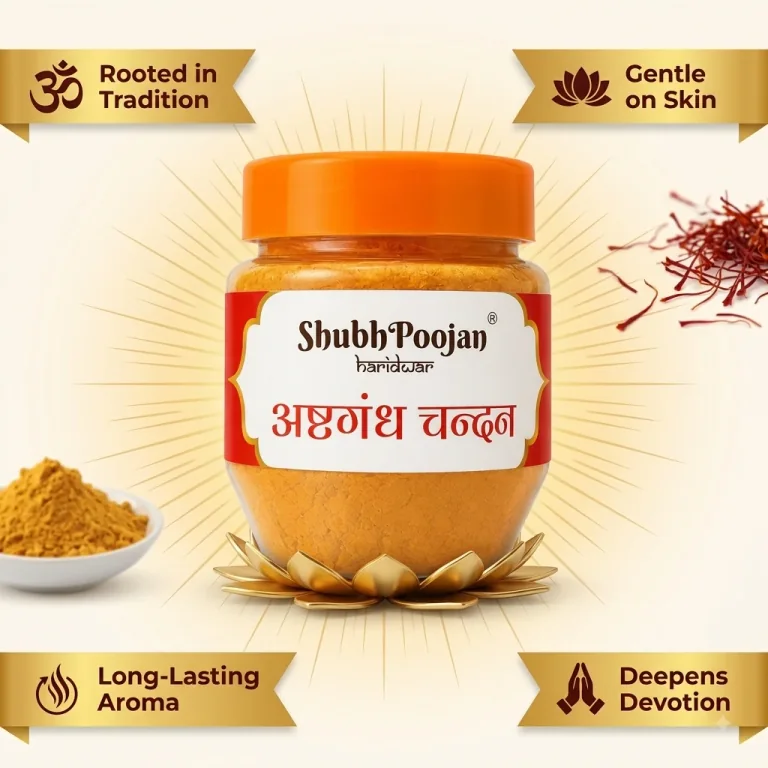
Ashtagandh Chandan Powder
A familiar ritual, a quiet moment.
Get to know ashtagandh: a traditional aromatic blend used in worship. Explore its place in pooja and tilak, how to prepare the powder, and the eight ingredients in this 40g jar.
Final price and availability may vary by marketplace.
- Eight-ingredient blend
- For pooja & tilak
- 40g jar
About this pooja essential
Understanding ashtagandh chandan
Ashtagandh, also written as ashtagandha or ashtagandham, is a traditional blend associated with fragrance and worship. The name combines ashta, meaning eight, and gandha, meaning fragrance. It refers to a combination of eight aromatic ingredients.
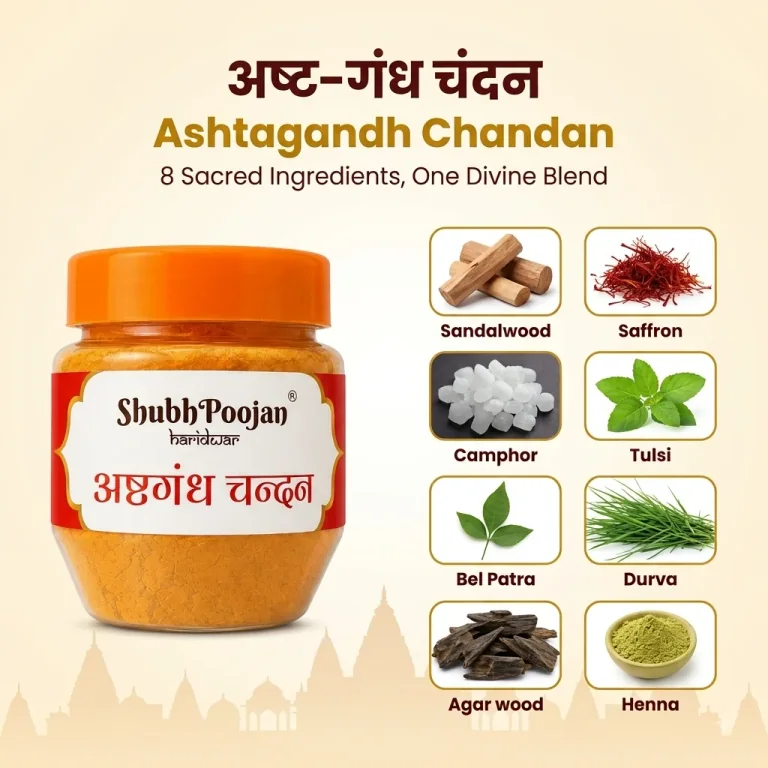
Ingredient combinations differ between traditional descriptions and present-day preparations. The name alone does not identify a single universal recipe. For this ShubhPoojan product, the eight ingredients are listed below.
Where does ashtagandh fit into a ritual?
- Tilak: The powder can be prepared as a paste for a traditional forehead mark. The shape, placement and significance of a tilak depend on the tradition and occasion.
- Pooja: Fragrant preparations have a place among the offerings used in Hindu worship. Ashtagandh may be included with your pooja essentials according to your household’s practice.
- Festivals and ceremonies: It can be prepared for the rituals followed in your home or temple. Ask the person leading the ceremony about the appropriate use.
The eight ingredients in this blend
ShubhPoojan’s confirmed ingredient list is sandalwood (chandan), saffron (kesar), camphor (kapoor), tulsi, bel patra, durva, agarwood (agar) and henna (mehndi).
This is a blended powder rather than a single-ingredient sandalwood powder. “Chandan” means sandalwood; “ashtagandh” describes the wider blend. Other ashtagandh preparations may contain a different combination of ingredients.
Preparing the powder for tilak
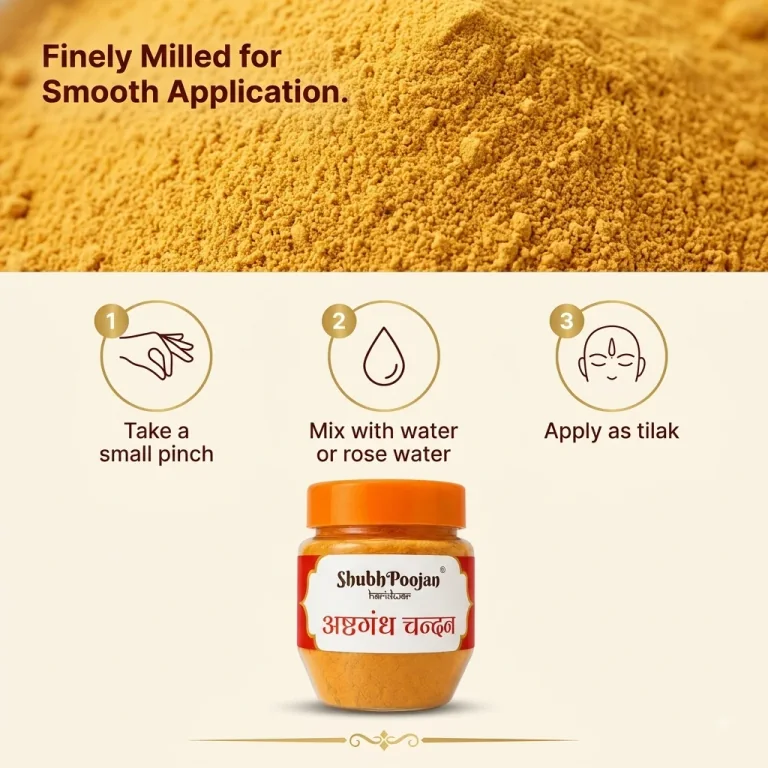
- Take a small pinch into a clean dish using a dry spoon.
- Add a few drops of clean water and mix. Add water gradually until you have a paste suitable for your customary application.
- Use the prepared paste for tilak according to the practice you follow.
Mix a small amount separately rather than adding water to the jar. This product is supplied as a powder, so you prepare the paste when needed.
Keeping your pooja powder dry
Close the cap securely after use and store the jar in a cool, dry place away from moisture. Keep wet utensils and prepared paste out of the powder jar.
About this 40g jar
| Product | Ashtagandh Chandan Powder |
|---|---|
| Brand | ShubhPoojan |
| Net weight | 40g |
| Reference price | ₹149 |
| Form | Powder to be mixed when needed |
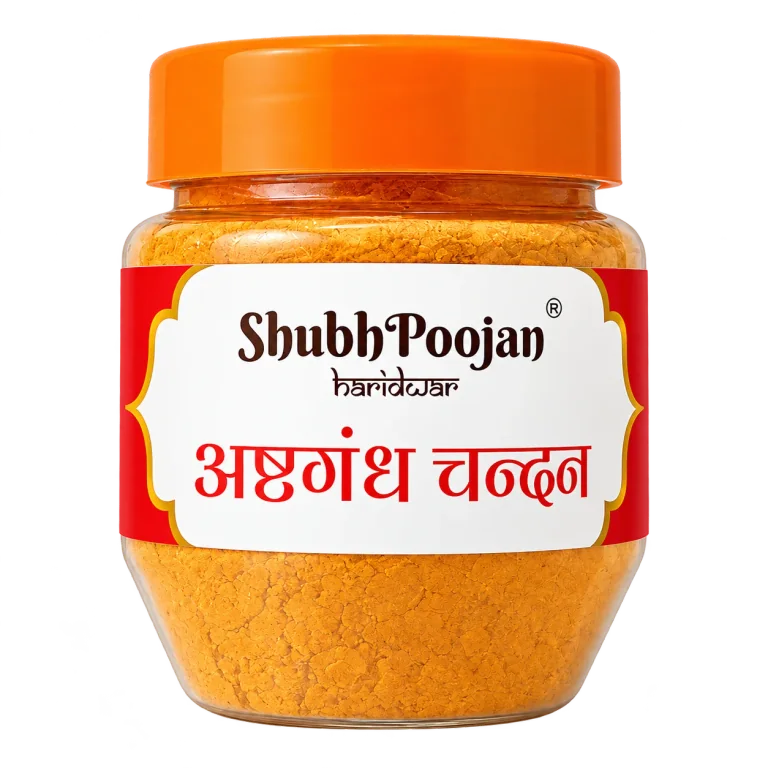
| Packaging | Jar with orange cap |
Questions about ashtagandh chandan
What does ashtagandh mean?
The name refers to eight fragrances: ashta means eight and gandha means fragrance. It is associated with a blend of aromatic ingredients used in worship.
Is ashtagandh the same as plain chandan powder?
No. Chandan means sandalwood. This ashtagandh product combines sandalwood with seven other listed ingredients.
Do all ashtagandh powders have the same ingredients?
No. Recipes differ. This jar contains sandalwood, saffron, camphor, tulsi, bel patra, durva, agarwood and henna.
Is this a ready-made paste?
No. It is a powder. Mix a small amount separately with water when preparing it for tilak.
Is it only used during festivals?
It can be part of daily pooja and tilak as well as festive ceremonies, depending on your household’s tradition.
How much does one jar contain?
Each jar contains 40g of ShubhPoojan Ashtagandh Chandan Powder.
How should I store it?
Keep the cap closed and the powder dry. Store in a cool, dry place and use a dry utensil to take out the amount you need.